
Rank Math SEO Experiment: How I Took My Website Score From 65 to 81
I had a page sitting at 65/100 in Rank Math.
It wasn’t a broken page. It was already published, structured, indexed and showing up in Google Search Console. But Rank Math was still finding things it thought I could improve.
Instead of changing everything at once, I decided to turn it into a Rank Math SEO experiment.
The Rank Math link above is an affiliate link, it’s also the actual plugin used throughout this experiment.
I captured the page before making any changes. I recorded the Search Console data. Then I worked through the recommendations one at a time and recorded what happened to the score.
The score eventually went from 65/100 to 81/100.
But there is an important catch.
An 81/100 Rank Math score does not prove that my SEO improved. It only proves that I addressed more of the criteria Rank Math was checking.
The real test will come later, when there is enough Google Search Console data to compare.
For every change below, I’m documenting it the same way: what the page said before, exactly what I inserted or changed, what it said after, and what the Rank Math score did as a result. Where I have the exact wording, it’s here in full. Where I don’t, that’s marked clearly rather than filled in with a plausible-sounding guess.
The Page I Decided to Test
The page I used for this experiment is my main Website Experiment page.
It documents the rebuilding of Griffith Pro Marketing from the ground up, including WordPress, SEO, performance testing, hosting, conversion work and the mistakes that happen along the way.
I deliberately chose this page because it is a real working page on my site rather than a test article created specifically for this experiment.
It was already live. It already had content. And it already had some Google visibility.
That gave me a real starting point. It’s also the same page the rest of this Rank Math SEO experiment is built around, every score and every screenshot below refers back to this one URL.
My Rank Math SEO Experiment Started at 65/100
Before touching the page, I recorded the Rank Math score.
65/100.
Rank Math had already passed several basic checks, including the SEO title, meta description, URL and content length.
But the additional checks showed several areas that needed attention. There were recommendations relating to:
- Headings
- Image optimisation
- Keyword usage
- Outbound links
- Title readability
Rather than fix everything in one go, I decided to make one change and record the score before moving on.
That gave me a much cleaner experiment. If I changed five things and the score increased, I wouldn’t know which change actually caused the difference.
So I kept the process simple: change → save → check score → capture evidence → move to the next recommendation.
I Captured Google Search Console Before Changing Anything
The Rank Math score wasn’t the only thing I wanted to record. I also checked the specific page in Google Search Console before making the changes.
The numbers were very small. For the page I was testing, the baseline showed:
- Impressions: 1
- Average position: 6
- Clicks: 0
- CTR: 0%
That is nowhere near enough data to make a serious conclusion about SEO performance. But it is still useful as a baseline. I wanted a record of what Google was showing before I changed the page.
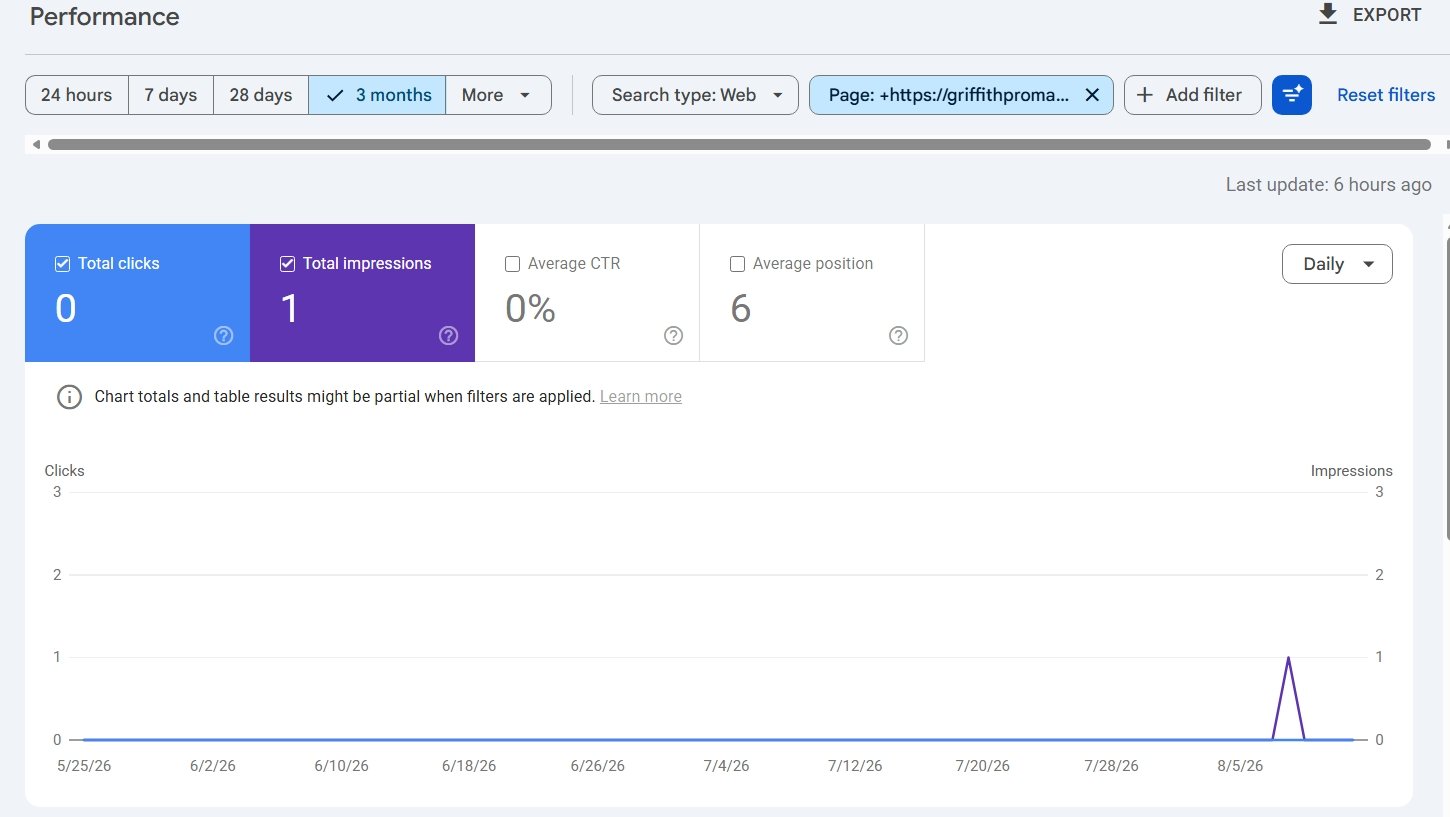
This is important because the next part of the Rank Math SEO experiment will not be based on what Rank Math thinks happened. It will be based on what Google Search Console actually reports.
Working Through the Rank Math SEO Experiment Recommendations
It would be easy to just show the final 81 and call it done, but that skips the actual evidence. The experiment is really about what happened after each individual change, so here’s the progression, starting with the first one. For each change I’ve included a ledger, before, what was inserted, after, and the resulting score, rather than just describing the optimisation in general terms.
Change 1: I Changed the SEO Title
The first thing I changed was the SEO title, the opening step of the Rank Math SEO experiment. I deliberately recorded the Rank Math score before making the change so there was a clear starting point.
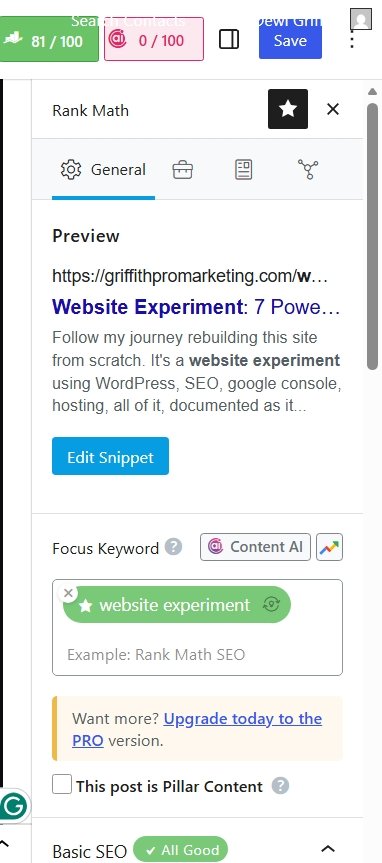
Before touching anything, I looked at exactly what Rank Math was flagging at 65/100. Two panels covered the title specifically:
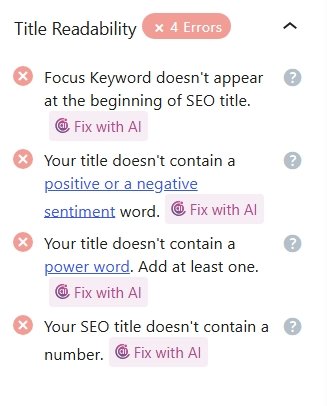
Every one of those four errors was about the title itself, not the content underneath it. That’s what made the title the obvious first change to make and test in isolation.
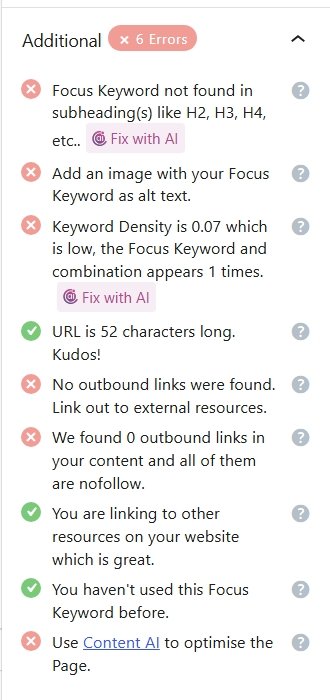
I’m including that second panel here deliberately. It’s the clearest way to show that the title fix below wasn’t the only thing wrong with the page, it was one specific, isolated change, made and measured on its own before touching anything else.
I wasn’t treating this as proof that Google rankings had improved. Rank Math was simply reporting that the revised page better satisfied its own content analysis criteria. The Google Search Console data would need to be watched separately.
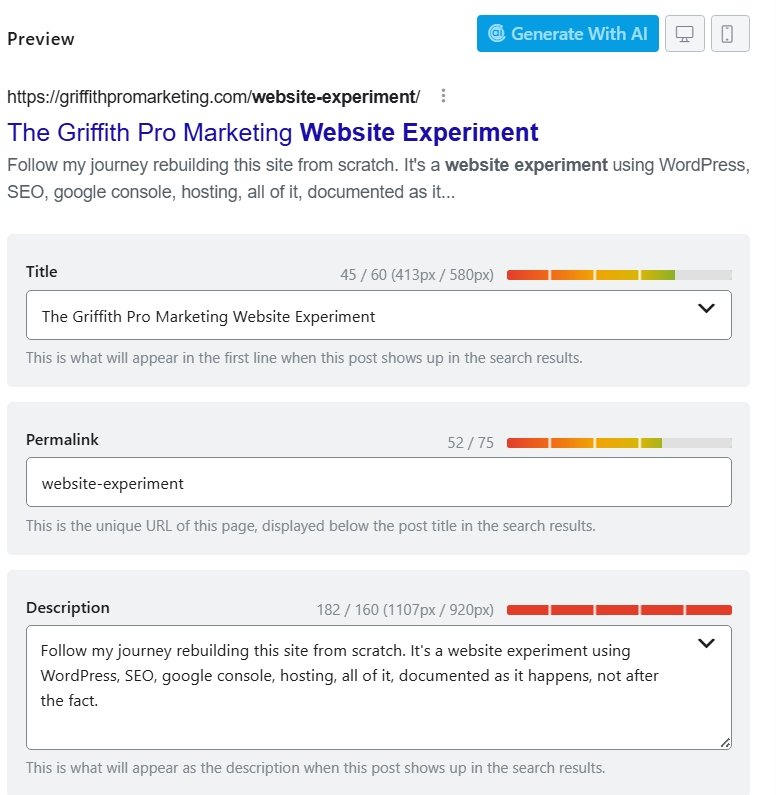
Rank Math score: 65/100
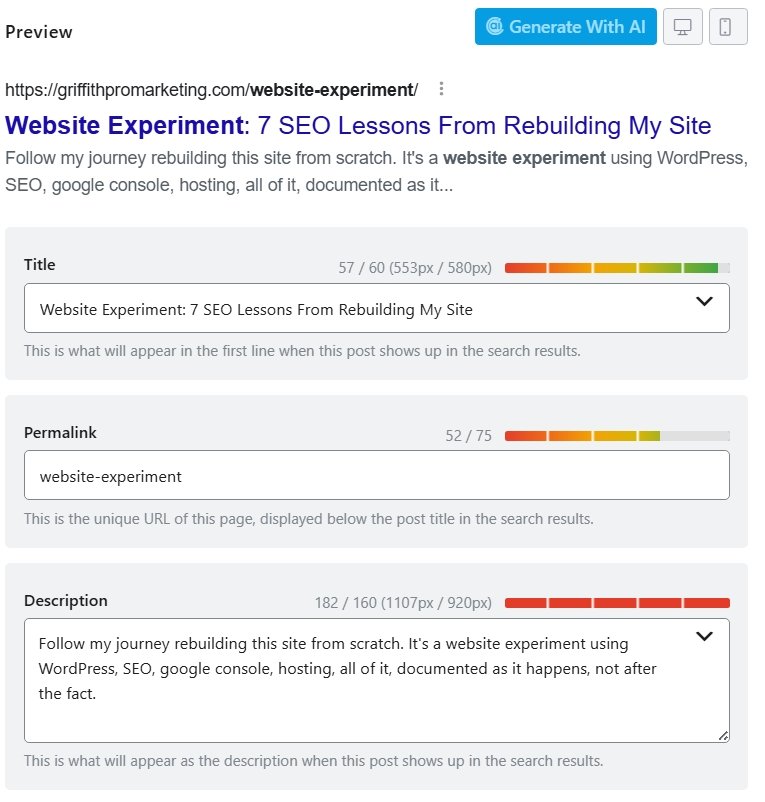
“The Griffith Pro Marketing Website Experiment”
Rank Math score: 69/100
“Website Experiment: 7 SEO Lessons From Rebuilding My Site”
Before and after: changing the SEO title moved the Rank Math score from 65/100 to 69/100.
The rewrite addresses two of the four title errors directly. “Website Experiment” now leads the title instead of the business name, which fixes the keyword-position flag. “7” gives it the missing number. The power word check is what the later, separate title adjustment further down was written to fix. The sentiment word flag isn’t addressed by either title edit, it’s an open item I haven’t gone back for, and I’d rather leave that visible than imply the title is now fully clean when it isn’t.
That does not mean the page suddenly ranked better in Google. Rank Math’s score measures how well the page satisfies its own SEO recommendations. The real test is what happens next in Google Search Console.
Change 2: H2 Optimisation
The next step in the Rank Math SEO experiment was a subheading, not the title. The focus keyword didn’t appear in any subheading. The page already had a proper heading structure, so this wasn’t about adding new headings, it was about working the exact phrase into one that already existed.

Change 3: Image Alt-Text Optimisation
The third step in the Rank Math SEO experiment involved an image. Rank Math wanted the focus keyword used in an image’s alt text. The image in question was the Search Console screenshot from the first 24 hours after launch, already relevant to the page’s own subject, so I rewrote its alt text to lead with the focus keyword rather than adding the keyword to an unrelated image just to tick the box.
Change 4: Outbound Link to Google Search Console
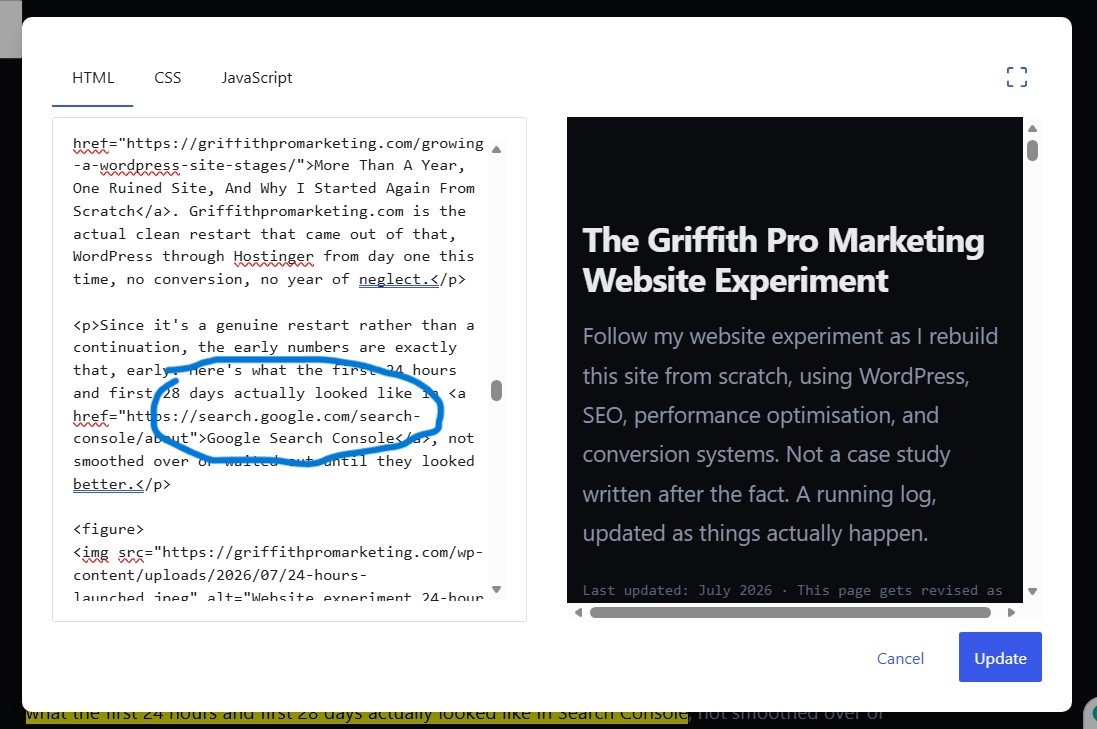
Rank Math flagged zero outbound links on the page, and the ones it did detect elsewhere were all nofollow. This fourth step in the Rank Math SEO experiment was, rather than dropping in an unrelated external link purely to satisfy the check, adding a link to Google Search Console at the point in the page where Search Console was already being discussed, since it’s directly relevant to the page’s own subject matter.
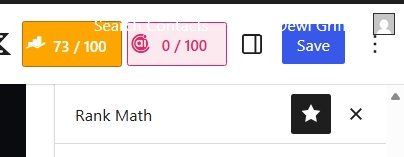
The score didn’t move. On its own, adding the outbound link satisfied that specific check without changing the total. I’m including it anyway, a change that produces no movement is still a result, and it’s the reason the real jump below is credited to the next change instead of this one.
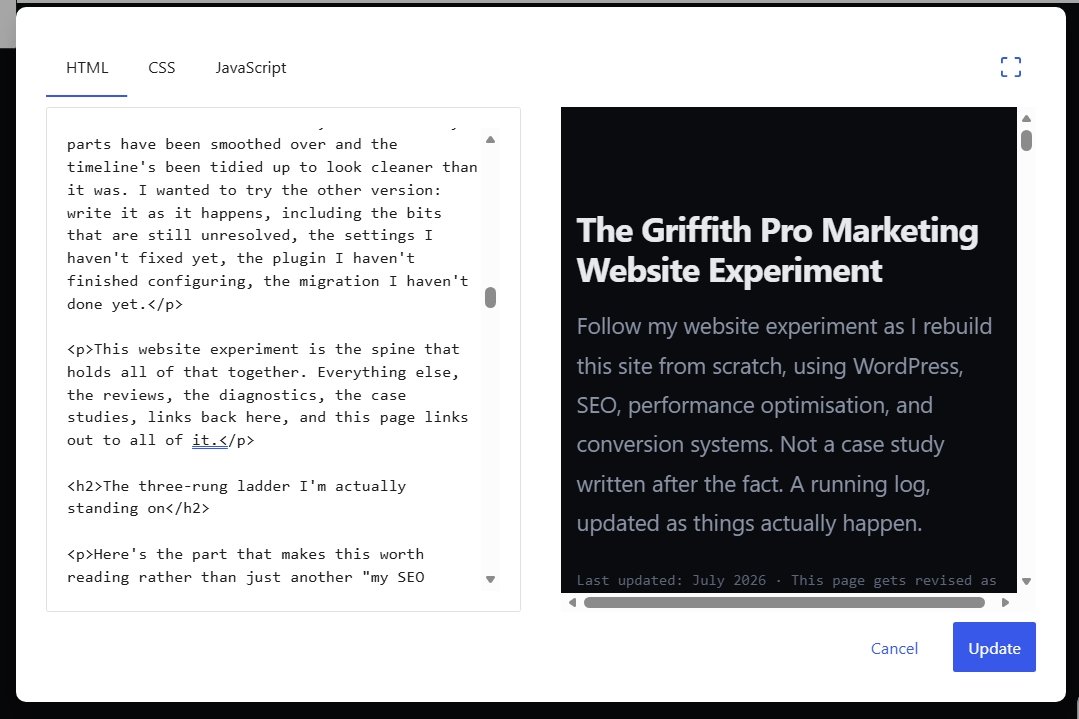
Change 5: Keyword Density in the Opening Paragraph
Rank Math’s Additional panel had also flagged keyword density as low, 0.07%, with the focus keyword and its close variants appearing only once across the whole page. The fifth step in the Rank Math SEO experiment was rewriting the standfirst, the opening paragraph at the top of the page, so it led with the actual focus keyword instead of a general description of the same idea.
This is the change that actually produced the largest single jump in the experiment, not the outbound link. Worth being precise about, since it would have been easy to credit the six-point jump to whichever edit happened right before the score changed, when the real cause was a separate, later edit to a different part of the page.
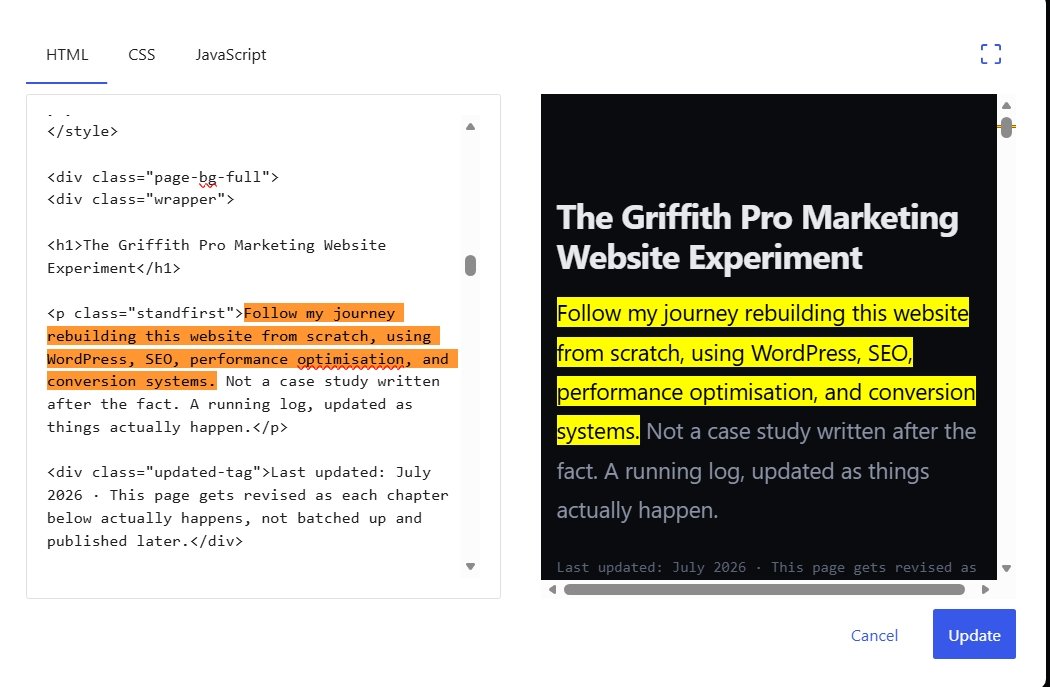
Focus keyword absent from the opening sentence
Focus keyword now leads the opening sentence
Before and after: rewriting the opening sentence to lead with the focus keyword moved the Rank Math score from 73/100 to 79/100.

Change 6: A Second, Separate Title Adjustment
This was not the same edit as Change 1. This was a later, separate adjustment to the title, the sixth and final step of the Rank Math SEO experiment, targeting the power-word flag that was deliberately left unaddressed in Change 1 so that earlier change stayed isolated to one variable.
Keeping these two title edits distinct, four points from the first rewrite, two points from adding a single power word later, is what lets each score movement stay attributable to one specific cause instead of being credited to “changing the title” as a single vague action.
This is much more compelling than saying “I optimised the page and got 81.” The number on its own doesn’t show the work behind it. The progression does.
A Possible Additional Change, Not Yet Confirmed
Somewhere in this Rank Math SEO experiment, I increased keyword usage in the body content beyond what’s captured in the six changes above, and I recall the score not moving as a result. What I’m not certain of is whether that’s the same edit as Change 5, or a separate one that hasn’t been logged. Rather than merge it into Change 5’s confirmed record or guess at where it fits, it gets its own entry here, kept visibly separate until the actual wording and sequence position are confirmed.
UnconfirmedIf this turns out to be a real, separate edit, it’s worth keeping in the final writeup for exactly the reason it’s tempting to leave out: a documented case where increasing keyword usage did not move the score is stronger evidence for this experiment’s credibility than another number going up. It’s the result that shows this wasn’t just “add keywords until Rank Math is happy.”
The Complete Rank Math SEO Experiment Progression
| Stage | Rank Math score |
|---|---|
| Starting point | 65/100 |
| After SEO title change (Change 1) | 69/100 |
| After heading change (Change 2) | 71/100 |
| After image alt-text optimisation (Change 3) | 73/100 |
| After outbound link added (Change 4) | 73/100 |
| After keyword density fix (Change 5) | 79/100 |
| Final title refinement (Change 6) | 81/100 |
That table includes something a lot of these writeups leave out: a change that produced zero movement. Change 4 sits at 73 both before and after, on its own record for exactly that reason.
What Actually Improved?
This is where I need to be careful with the wording.
I improved the Rank Math score. I haven’t proved that I improved the page’s Google rankings. Those are two completely different things.
Rank Math is analysing the page against a set of SEO recommendations. Google decides how and where pages appear in its search results using much more than the checklist inside an SEO plugin, which is the whole reason this Rank Math SEO experiment splits the two apart instead of treating them as one thing.
So I don’t want to take an 81/100 and turn it into a claim that my website is now better positioned in Google. That would be jumping ahead of the evidence, and it’s exactly the kind of overclaiming this Rank Math SEO experiment is trying to avoid.
Why I’m Stopping at 81/100
I could keep going. There are always more things you can tweak on an SEO page. I could change wording, add more keywords, rework headings, add more links, try to squeeze another few points out of Rank Math.
But that would change the nature of the Rank Math SEO experiment. I wanted to test what happened when I systematically worked through the recommendations, not spend hours trying to make a plugin display 100/100.
So for now, I’m stopping at 81/100. The page is staying as it is.
The Part This Rank Math SEO Experiment Can’t Tell Me
The next question is much more interesting. Did Google actually notice any of this?
I don’t know yet. And I’m not going to pretend that I do.
My Search Console baseline was tiny: 1 impression, position 6, 0 clicks, 0% CTR.
That gives me something to compare against later, but it doesn’t give me enough information to claim anything yet. The next stage of the experiment is therefore outside Rank Math. It’s Google Search Console.
What Happens Next?
I’m going to leave the page alone and let the data accumulate. Later, I’ll return to the same URL and compare the Search Console results with the baseline I captured before making the changes.
I’ll look at:
- Impressions
- Clicks
- CTR
- Average position
The question will be simple: did moving the Rank Math score from 65 to 81 make any measurable difference in Google Search? That’s the question the whole Rank Math SEO experiment has been building toward.
Maybe it will. Maybe it won’t. Maybe the change will be too small to tell. That’s part of the reason I’m documenting the experiment instead of writing the conclusion first.
This Is Only Part 1 of the Rank Math SEO Experiment
For now, this is where Part 1 of my Rank Math SEO experiment ends.
The first stage was about the changes I could control. 65/100 → 81/100. I’ve captured the evidence along the way, including the original Rank Math score and the Google Search Console baseline.
The next stage is different. I need Google to provide the evidence.
When there is enough Search Console data to make a meaningful comparison, I’ll publish Part 2 and see whether the optimisation actually translated into changes in search visibility. If you want the full context for the page being tested, the Website Experiment page is documented here.
Until then, I’m leaving the page alone. The Rank Math score has changed. Now I want to see whether Google cares.
Image plan for this post: seven screenshots in the order shown above, each with its own alt text describing what’s actually visible in that image, not the focus keyword repeated mechanically on every one. Better accessibility, and more defensible SEO.
Want to know why a page isn’t ranking in the first place, before an on-page score even matters? The full diagnostic breakdown covers that here.